Matt W Cook

writer.former fundamentalist.christianly fellow

My Son’s Name

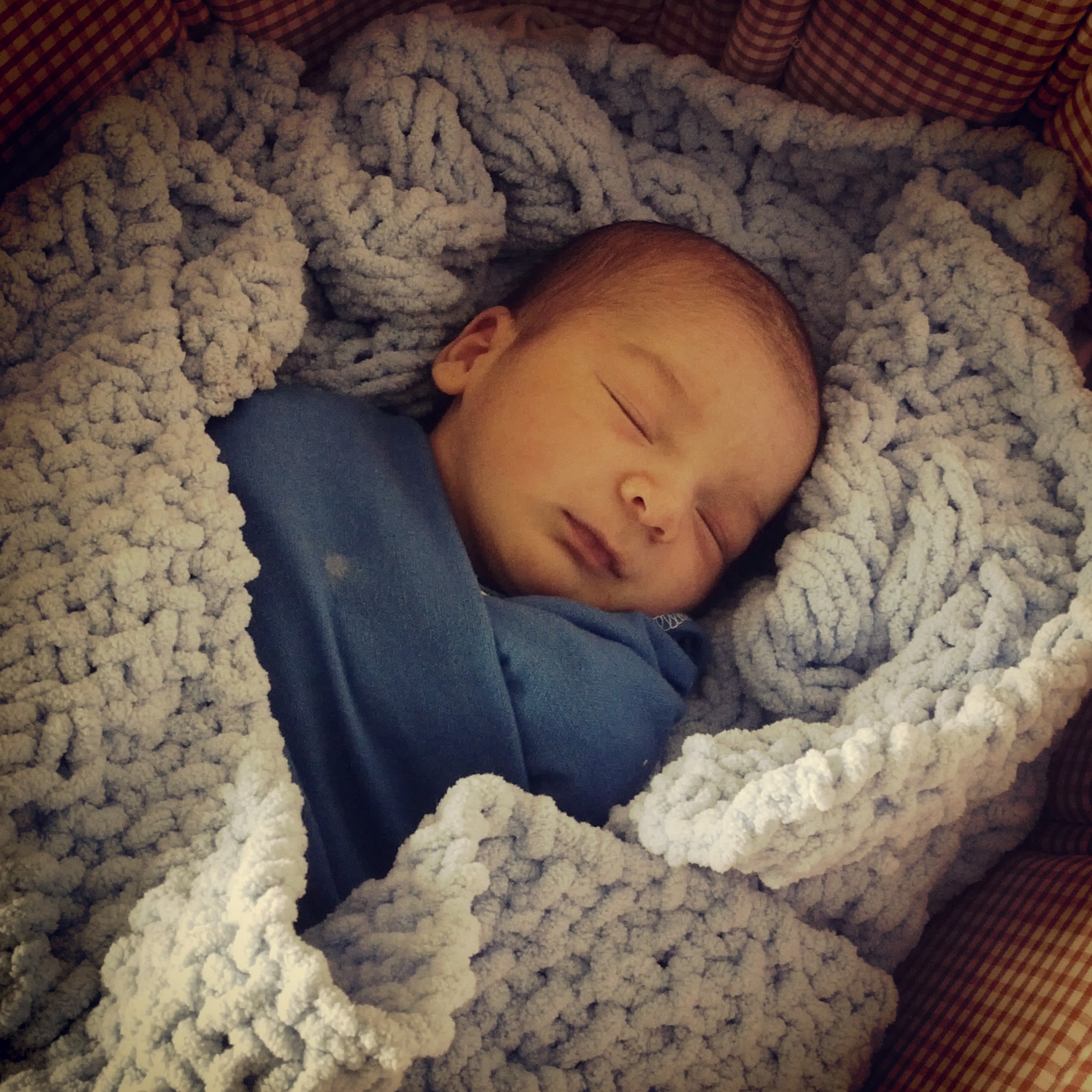
There are a few ways to name a child, if you’re mindful about it. One is to look through names, the people who held those names, and the meanings of those names, and pick one that fits the child. That’s hard, though. Because my new son does not know what he loves yet. Except breasts. He totally loves breasts (but who doesn’t?).

Or we could have chosen names as templates for the child to grow into. We could have called him William, so that he’d grow up into a guardian of humanity. Or Aaron, so he’d grow into a teacher of wisdom. But who are we to chose what he will be and what he will love?

Besides, a name does not bestow its characteristics. The rose isn’t vibrantly red, deliciously pungent or dangerously thorned because of the word rose. The word conjures those images because of the plant, not the other way around. The awesome people of the past are not awesome because of their names. Their names are awesome because of them. So instead of naming him something that we hope he will grow to emulate, we chose names that carry meanings, either by their namesake or etymology, that we value and love. The name is our birthday gift to our son—a package of syllables that communicate how we feel about him.

Our son’s name is Isaiah Dev Cook.

Born Saturday, April 27, 2013 7lbs 14oz

Born April 27 at around 5am
7lbs 14oz

Isaiah was a human. A prophet. An intelligent flesh and blood creature who looked to the sky and perceived the creator’s will. He preached love and compassion and understanding. His words became the thesis for our i117 widow’s aid project (Isaiah 1:17). His views on fasting tear apart religious conventions and bring them down to a place that focuses on the needs of fellow humans (Isaiah 58). And it is in his writings that some of the most honoured pictures of the Christ, the archetype of perfect love, can be found (Isaiah 53).

My son’s name is Isaiah—the human who could hear the voice of God. The name is not a template for him to live up to, or a religious identifier, but an image of the perfect kind of humanity that Ruth and I love. It is a nascent echo of the most perfect expression of love finally uttered by the man Isaiah was pointing to: “Do as you would be done by” (Matthew 7:12).

Dev (affectionately Deva) is an ancient Sanskrit name that means ‘Divine’ or, in many instances, ‘God.’ Because my son is not just a creature. He is not only an animal. Attached to his frail physical form is a shard of God. A slice of divine, wrapped in a warm blanket of humanity. Dev is a name that reminds us of the meaning behind the ancient greeting of Namaste: “That which is divine in me salutes that which is divine in you.”

My son’s name is Dev—the sparkling divine being. Because when I hold him in my arms I cradle the living universe. Because he has consciousness and divine light and understanding inside of him that can only grow greater and stronger. Because he is a vibrant fraction of God. And if God is infinite, what is the weight of a fraction of God?

My son’s name is Isaiah Dev Cook. We use both names when we speak to him because he is both. He is the spiritual animal and the fleshy divine. He is the marriage between creation and creator. He is just like you. He is just like me.

And his names are reminders for us. When we get frustrated with his antics, because all children eventually frustrate their parents with their antics, we will have to pause when we call him. How can you speak angrily to Isaiah, the human who can hear the voice of the Universe? How can you yell at Dev, a pure slice of God? How can we do anything for our son, and our other children, but care for them and guide them and cherish them?

Thanks for all your happy well-wishes. I hope you get to meet Deva soon.

Honesty for Neutral People

I get my energy from people.  I have a yearning need to have people look at me and talk with me and listen to me talk.  That’s the way I am and I love it.

But it gets people like me in trouble sometimes because we get all giddy and warm when people approve of us.  And all mopey and weepy when people criticize.  It’s usually not because the people around us are mean or anything–we just have a hard time figuring out how to handle disappointment.

And that puts us in the dangerous position of being influenced by The Neutrals.

Neutrals are a class of relationship that has been empowered by social media.  You can tell you are in a Neutral relationship when the best interaction you have with a person is silence.  Silence is the Neutral’s stamp of approval on your life.  So long as they don’t talk to you, you’re doing something right.

But when you step out of line, when your words or lifestyle fall short of their standards, then they let you know.  Gently, of course.  Mindfully, even.  Hell, they might even be dead-on-right in whatever they are saying.  And they form everywhere–at work, at church, online, at school.  Everywhere.

If many of your relationships are Neutral, you will find it hard to be yourself in those venues because your self-expression risks waking the Neutrals.  And if you are not careful you will find your conduct dictated by people who ignore you at the best of times and oppose you when you step out of line.

The Internet makes many relationships potentially in The Neutral.  And I guess I could whine about that.  Maybe get some cathartic victim-talk going on.  But I’m thirty-one now and, like Nick, too old to lie to myself and call it honor.  The problem isn’t with Neutral relationships at all.  They are a partially a product of our tech and partially a product of well-meaning lovely people who just don’t have time to invest in every single one of their eight hundred Facebook friends.

No, the solution isn’t some victim rant.  It’s not the melodramatic pulling of hair and wonderment as to why the world can’t understand us.  The world never understood us–any of us.  It never will.  It’s too big, and so are we.  The best way to deal with a Neutral relationship is to not deal with it at all.

What do you get when you behave the way they want you to?  Silence from The Neutrals.

What do you get when you behave the way your heart leads you?  Opposition (maybe) from The Neutrals.  Stirring approval from your heart.  Constructive empowerment from your invested friends.

It’s not hard to see which path gives you more.

The Neutrals are useful–sometimes they have great points to make.  But they are only useful for information.  They should never be the reason you do (or don’t do) anything.

Talking About Anarchism – A Foundation

The foundation for what would eventually grow into anarchism was laid for me in grade two by a mean-tempered teacher named Miss Martin. Every Friday Miss Martin quizzed us on the times tables. It was a grueling test of a hundred questions. It was so long it made our hands ache. That was the point. Because if you ever finished the test without a single mistake, you’d be exempt from taking it for the rest of the year.  I got a perfect score on the third try.

I knew it as soon as I turned it upside-down on the desk next to me. I had been so close the week before and was completely fed up with the tedious and pointless work. I paid attention, avoided every careless slip, and nailed it. But when my peer marker handed it back, there was a tiny red X beside the fourth question.

3×3=9

But I was right. I knew I was right. I pointed the mistake out to my peer marker. She said my 9 looked like a 4. No problem, I thought. We’ll take the case to Miss Martin. The One Who Knows.  But Miss Martin took the Marker’s side.

I remained calm. I still knew I was right and I had lots of ways of proving it. I pointed out that 4 wasn’t even close to the right answer and no one in the whole class could have made that mistake. I showed her examples of how I wrote the number 4 compared to how I wrote 9 and clearly proved that my 4s looked nothing like 9s and my intention was obviously to put down a 9.

“This will teach you to use better handwriting,” she said, dismissing all my facts with a wave of her hand.

“But it’s a math quiz, not a writing quiz.”  It was no use. I wrote the quiz again the next week

I was disappointed. But more than that, I was shocked. Because I had proved I was right. How could she not have seen it? Did I argue my points wrong? I wrestled with it all day long and eventually this seed was planted deep inside my consciousness:

They don’t know everything.

I started to notice that no one at all seemed to really understand what was going on with life, despite all their apparent confidence. The Ones Who Had It Right looked no happier and were no kinder than The Ones Who Had It Wrong. The most common answers to the most interesting questions were supremely confident, “Because [your teacher / your parents / the elders / my version of God] said sos.”

Eventually it stopped making sense to submit my mind and lifestyle to The Ones Who Know. Because they don’t know—not any more than I do, at least. Because if they are no better than me, why would I follow their conscience, intellect or goodness instead of my own? Miss Martin’s seed grew up and a new idea hit me.

I have no need of governance.

That is anarchism. And it tastes delicious.

The greatest sins we commit on our children.

We destroy our children almost as soon as they are able to speak.

The children who use persistence to achieve their goals are called stubborn and strong-willed.  We beat it out of them.  We threaten them.  “I said no!  If you ask me one more time…”  We are determined to break the strong will.  To win against the child.

Never mind that the world needs more good people who are stubborn and strong-willed.

The children who question are called rebellious and irreverent.  We frown when they ask the most sacred questions (“why?  why not?”) and give them the most pathetic answer (“Because I said so.”)  We teach them to obey.  To submit.

Never mind that the world needs more good people who are rebellious and irreverent.


And then we tell them to work hard, just not against anything we have done.  We tell them to be themselves, unless the themselves are too different from what we’d like them to be.  We tell them to fight evil and worldliness, as we define them.  We make them into ourselves, only younger and better-looking.


I cannot think of a greater joy than this:

My children stand at the Edge and look over all the things that were made before they were born.  At the philosophies, the causes, the works and religions and arts.  And they judge them.  Some are better than others.  Some are worse.  They can tell because they were taught to ask and to be satisfied only with reasonable answers.  They can tell because they do not love a thing for being old or hate a thing for being new.  They can tell because they were taught to chose a path, not follow a well-worn one.  They can tell because they were trusted to think, not carried.

And as they look, they pick up the things that speak to their souls.  And after collecting as much or as little as they want, they look at it all, they look at the world, and they say to each other:

“We can do better than this lot.”

They leave me and my naive little world

And create a better one.

Three Cheers for the Fetus!

Imbalanced.

You only need to balance things when you have finite competing objects.

You need to balance time awake and time asleep.  Because the human body needs a certain amount of both.  Because you’re not going to exist forever.

You need to balance eating for health and eating for fun.  Unless you’re born already in love with only the finest and healthiest goodies in the finest and healthiest portions.

But there are a lot of things you think you need to balance but you don’t.

Like love.

You sometimes talk about balancing love between people.  Balancing your love of your wife and the love of your mother.  The love of a friend and the love of a stranger.  The love of the self and the love of the world.  As if you had a finite amount of love available!  As if one side could get too much love!  They only seem imbalanced when the love of one or the other is deficient or poorly carried out.

There are so many things we do not need to balance.  So many things that don’t really compete.

Love and practicality.

The mind and the heart.

Strength and tenderness.

Passion and purity.

Work and play.

Spirituality and practicality.

Skepticism and trust.

Silliness and maturity.

Giddiness and sobriety.

Pacifism and activism.

Love and anything else.

Have I Ever Talked about Depression?

I used to be sad, pretty much all the time.  If you know me, you might think I’m lying.  I get a lot of energy from other people so I always seem to present as a cheerful, outgoing, happy happy chap.  But at night everything would change.  I used to cry myself to sleep.  Kinda weird, eh?  Fully grown dude writhing in sadness in his bed, hoping that his roommate across the room doesn’t notice.

It got better, but not until it got a lot worse first.

But then it got better.  I fixed it.  Almost completely.  It took time and sacrifice, but it got better.  So much better than when the sadness creeps back, it’s a surprise.  And it never stays for long.  It’s lost its heart.

For me, the key was honesty.  With myself.

Most of us have delusions.  And when we’re really, really honest with ourselves, we can identify those delusions.  No big deal, for a lot of people.  But if you’re like me, those delusions will subtly suck your life away.  They’ll kill your heart because your heart knows that they are not true.

I’m no doctor.  I have no idea what causes clinical depression.  But I know that I used to be very sad most of the time.  And I know that now I’m very happy most of the time.  And the only difference in my life between then and now is that I am honest and free and mindful.  And the only times the dark comes back is when I lose my honesty, freedom and mindfulness.

Ariel’s Story – Eleven

** Read the previous chapter here **

A sharp snap and I woke up.  Raging noise everywhere, all around, tumbling, screaming.

I grabbed hold of a firm object nearby.  Whatever it was it fit perfectly into my hands.  I braced myself against the tumult.  Waves of angry salt water crashed over me.  I held tight and closed my eyes against it.  Water leaked into my mouth.  It tasted good.

The storm raged on and the shock of coming awake to it wore off.  I started to stand, still clutching the Firm Object.  It had eroded a bit since the storm had begun, but it seemed to have firmed up again.  The waters pressed against me, and I found myself pressing back on them as I widened my stance and turned my face away from the waves.

My neck began to ache and I was forced to face the storm.  The Firm Object shifted as I faced forward, and I thought I was going to lose it.  But then it became Firm again and I felt safe.  I was surprised at the way the water felt, flowing over and past my face.  It did not sting, but warmed and massaged me with its raging furor.  At one point I gasped, and the waters that filled my mouth did not choke me.

I was standing tall now.  I opened my eyes and the water stung for a moment, and then became soothing.  I took a step forward.  I don’t know if I stopped holding the Firm Object or if it eroded away in my hands.  I never looked back to see what it had been.

I walked through the storm.  Either it was dying away or I was growing used to it.  I could see where I was now and I remembered.  I had been by a dumpster, licking my wounds after failing to rescue my fairy queen, Sume el Raj.  I must have fallen asleep or gone into a daze.  I looked up at the sky.  The clouds were thinning along with the rain and I could see sunlight coming through.  I must have been by the dumpster all night.

The storm, while leaving me unharmed and rather invigorated, had wreaked havoc on the town.  Wide fractures yawned up in the road, making walking tedious and driving impossible.  The apartment buildings were all windowless and chucks of steel and stone were bitten out all over their sides and corners, showing the skeletal walls within.  The townspeople didn’t seem to notice.  They have firm hearts, I suppose.  Children still played on the streets, leaping over wide crevasses and making me shudder.  Adults still pressed their dying automobiles along, making ridiculous maneuvers to avoid the most dangerous fractures.  It was stressful to watch them.  I avoided the roads and walked toward the cistern.

It had flooded, of course.  I couldn’t see the Man in the centre or his victim.  I wondered if they had drowned.  I couldn’t bring myself to care anymore.  They were just part of a dream I was having.  But the devotees were still there.  I was shocked to see that many seemed to be drowning.  I ran down the hill and waded out into the fetid water.  It had grown worse in the storm, and even in the now brightly shining sunlight it seemed dark and icy and filthy.  All the spoiled things of the town seemed to have washed in.

I drew near to a man I knew and reached out my hand to pull him to safety.  He floundered and glared at me, coughing up water.  I thought he was struggling to reach out to me, so I took his hand and pulled.  He gave an angry cough and pushed back, splashing some of that water on my face.  It burned and the refreshment from the storm was spoiled.

“Grab hold, man!” I called to him.  “I’ll pull you out.”

The man forced himself to tread water harder so he could speak to me.

“Idiot,” he coughed.  “Why would I leave?  This place is awesome.”  He gave me an angry patronizing look and pushed himself into even deeper water.  Every time I tried to reach out to someone, they pushed back against me, some angry and some so very sad that I had disturbed them.  The sun was beginning to set, it seemed, and eventually I just left them.

I didn’t know where to go, but I knew I would soon leave the town.  I looked back toward the open eastern gate, the gate everyone entered when this story began.  The endless desert was beyond that.  There was nothing there, for me or anyone.  I put my back toward it and walked west.  I past through interesting and pretty places as I went west.  Parts of the town that I had not known existed.  Other buildings and other cisterns.  Some of the cisterns were tiny and looked almost perfectly clean when the sun hit them in a certain way.  Others were large and some were even dirtier than the one I had come from.  Others were old and many were almost completely abandoned.  But all cisterns, only cisterns.  And I had lost all taste for cisterns or even fountains.  I still felt the taste of the Stormlight on my mouth.

I came to a wall.  A tall wall made of brick so old it looked like natural rock.  I glanced behind myself one more time and took in the scope of the massive, beautiful, psychopathic town.  I waved at it, at everyone, at no one.

I climbed the wall, and dropped out of sight.

Beyond the wall, I follow the sun and learn to keep up with it.

Beyond the wall, I see wonderful things.
Misc.

Stories are great because they let us have different and awesome human experiences.

Fun is the only reason to do anything.  Even work.  You work for money.  Money is used for fun.  Enough money for fun is enough money.

The funnest thing ever is being mindful about every moment as it passes through you.

My wife is the only one I ever could have been with.  If I had been with anyone else I would not have grown and I wouldn’t have been having so much fun.

Gatsby’s mistake was trying to relive the awesome moments of the past.  He should have been looking for awesome in the future.  Or, better, in the present.

Nick Carraway didn’t get it.

I love you.

Portal 2 might be the most perfect video game ever.

All the atoms in my body were created at the beginning of time and have existed for billions of years and have made up galaxies and stars and planets and vegetation and animals and food and the countless generations of mankind.  And so were yours.  We’re so related it’s scary, and I don’t even know your language.

Their is a chemical that your brain whenever a cherished idea is attacked.  It modifies your thought process so you are less likely to acknowledge any reasoning that might harm your cherished idea.  But you probably don’t believe that.

Sometimes I think so much about the mystery of existence that I get frightened.  And I still laugh at fart jokes.

I am free.

There is no reason not to be free.

To Temia and Frances

My niece and my grandmother both died very recently.  The youngest and oldest members of the Cook family.

When a baby dies, the pain is harsh and visceral and immediate.  There is an unnatural flavour to it.  We are not wired to easily accept death in the generation below us.

When a grandmother dies, the loss is more spread out.  The end of an era.  It’s like having the house you’ve lived in all your life torn down over your head.

Things touch me in strange ways.  The way the funeral home is now a familiar place.  The way my niece’s death struck me when I noticed the shoes her body wore in the tiny coffin.  The way my grandmother’s voice floated to me while the congregation sang old hymns I grew up with.  The shifting, uncertain way I approached the pulpit to give my words at both funerals.  The scent of flowers, beautiful and arranged with love, giving a sense of life and renewal, even though they also were cut and would not live long.  The carrying of my grandmother’s coffin up and down the same stairs we used to carry her up and down when she went to church, laughing with her as we went and joked about how heavy her wheelchair was.

Memories of my grandmother.  How she gave us all Swiss Army Knives one Christmas, and we went home bleeding and grinning.  How her little white house on Spruceside Crescent as a sort of second home—a safe and warm place full of people and food and a kind of freedom that only grandparents can give.  The message she whispered as I laid her coffin down atop that deep, deep grave: “I lived well.  I loved freely.  I laughed loudly.  I made my home an open place, devoted to the making of peace and pies.  I trusted my grandchildren enough to give them knives for Christmas and I didn’t freak out when they cut themselves on them.  Remember my whole life, not just the last years since my stroke.  It’s not the last words or acts that matter.  It’s the whole thing.

The spark of light buried deep in the shock of my niece’s death.  The vibrant life that shone in her for six months, no less full for the quickness in which they were spent.  The focused and determined play my daughter had with her during the short time I was blessed to visit with her.  The serious depth that struck my son when he heard of it, took her photo off the fridge and cried as he held it—overcome with emotion at the age of seven.  The message that she whispered to me as I stood in the funeral home and stared at her shoes: “I lived well.  I never learned to waste life on things that gave me no joy.  I never learned to give up on my dreams.  I never learned cynicism or how to be judgmental.  I spent my short and beautiful life clinging to the people who loved me and letting them cling back to me.  I left the world undefeated by it—something very few people can say.

I have a deep and uncompromising contempt for death.  It is legitimate and true, I suppose, to view death as a doorway to the next grand adventure.  But that does not overcome the deep, visceral view that lives in each of us—death is a tragic and evil thing.  Death is the first and universal enemy of mankind.  And even if I look at death as a portal to another, better world, it is still my enemy.  It is still something that I will not enter willingly.  I will still rage, rage against the dying of the light.  And I will lose.  Death will take me, though not quietly.

But my grandmother Frances and my niece Temia remind me that the best way to spit in the face of death is not to fight it when it comes near, but to live while I’m alive.  Like they did.

I miss you, Grandma.  My memories of you bleed together, making my stories a sort of collage that only I can fully understand.  You were a pillar and a foundation.  My life is missing something without you in it.

I miss you, Temia.  The light in your eyes and the authentic smile on your lips.  The way you look either curious or excited in nearly every photo I look at.  You are an inspiration and I long to have some of that light and curiosity and excitement.

You both touched me in a deep place.  I’m sad you’re gone.  Thank you both for being awesome.