
Matt W Cook

writer.former fundamentalist.christianly fellow

Tag: intolerance

Subway Evangelists

     A Muslim evangelist approached me while I was waiting for my subway today. He handed me a book and tried to get me interested in his religion. I told him I had lived in Pakistan and he thought that was pretty cool. He told me that Pakistan, in his opinion, was not a good example of a Muslim country.
     “Don’t get me wrong,” he said. “They have great family values there, unlike here in Canada.”
     “Okay.”
     “But the problem is all the Hindus.”
     “Oh. Wait, what?”
     “And Afghanistan used to be a good Muslim country, until the Americans removed the Taliban.”
     “Huh?”
     “Now only Saudi Arabia is any good.”
     “…”

     My train came and I made my getaway. I flipped through the book he gave me. It was about how capital punishment is merciful and condoms deny women the honour of motherhood.

     I threw it out at the next stop.

     Getting on the bus, I started reading Tina Fey’s Bossypants. She talked about a high school health teacher she once had who spent a day educating the class on how to recognize and avoid homosexuals. Because they are ruining the world, of course.

It’s the Hindus’ fault.
It’s the gays’ fault.
Blah blah blah.

     I remember giving myself a tour of my son’s elementary school. I saw a poster on the ground, obviously torn off the wall and defaced. It had named the school a safe zone for people of all races, religions and sexual orientations. I guess some people don’t like the idea of making the world safe for people who walk different paths.

     It’s all so silly, though, isn’t it?

     Every group claims they want to see peace on earth and goodwill toward men. But only on their terms. Peace, so long as you become us instead of them. Peace, so long as you stop being so gorram different.

     I used to think that the only way to peace was if everyone in the world stopped being whatever they were, and became more like me. My religion. My sexuality. My philosophies of government and economy. It was straight, Christian, conservative, capitalism or bust. And I spent many, many hours trying to get people to switch sides.

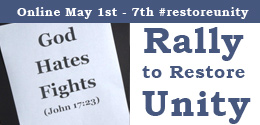
     But what if we put these labels aside and recognized each other as fellow humans, first? Instead of blaming the Hindus or homosexuals for whatever problems we see, what if we just shut up and gave peace a chance? What if we all just got along?

     Cliche? Simplistic? Maybe. But I heard a clever guy once say that we should, so far as it depends on us, be at peace with everyone. So I’m not going to blame out social ills on this religion or that lifestyle. Instead, I figure I’m going to be the change I want to see, open my arms in fellowship to everyone, and be at peace with all people.

     Blaming other groups is easy and cathartic. But it does little more than generate more hate and animosity. And we have enough of that in the world, already.
Three Farmers


     Three farmers, hard and thorough and in love with their land. They lived close to each other, surrounding a crystal pond where fish splashed and frogs grunted. Theirs were the largest and most fruitful fields in the region, it was said. Farmer Bob grew all manner of vegetables. His carrots were as large as a man’s arm. His tomatoes nearly burst with juicy tenderness. And his potatoes were so perfect as to be meals in themselves. No one could ever complain about his vegetables.
     Farmer Joe, living in the field next door, grew grapes. And what grapes! Massive purple grapes that quivered with juice, so heavy on the vine that they nearly brought the fences down each year. Brilliant green grapes without a drop of sour. Shiny red grapes that made a man despair of eating any grapes but these. And the wine that was produced from all these grapes was responsible for most of the best parties in the region.
     Farmer Tom was the last farmer surrounding that crystal pond. His fields were full to the bursting with the most beautiful, yellow grain. The heads of his grain were massive and weighed the whole stalks down by the time harvest would come around. Every health-conscious mother in the region would only buy bread made from his grain and every serious-minded drinker would only buy beer made from his barley.
     Farmer Bob, of course, counted his own crops as the proper crops befitting a farmer. For without vegetables who could live in any kind of health? Farmer Joe, of course, counted his grapes as the most fitting crops for a true farmer to grow. Because without the sweetness of fruit and wine, what reason can there be to live? And, of course, Farmer Tom decided that grains were the kind of crop a farmer ought to cultivate. For bread and beer go together to make a circle of well-being. Being neighbours, they would often consult each other on these topics and visit each other to try and win the other to their side. They would go to Bob’s house to feast on his vegetables, which they all had to admit, were very fine. They would sup at Joe’s house and enjoy his merry-making wines. And they would eat at Tom’s house, having full measure of bread and beers. And so they continued, disagreeing, feasting and benefitting the village.
     In the course of time, things changed, as things are wont to do. And one of the farmers, I cannot remember which, realized a startling truth. Each farm drew, as the life-source of all its crops, from the crystal pond. The crystal pond that each farm touched. And a devilish thought crept in that first farmer’s head: “I have need only to reach out my hand and hinder the flow of water and their crops would begin to suffer! And then the ignorant townsfolk would see how frail the crops of my neighbour are and, in contrast, how hardy my own are!” And, walking with that thought, he hindered the flow into his neighbour’s field. And so the crop suffered.
     On the very same day another of the three farmers was walking through town and saw the townspeople buying wares. A rather large family was buying a great deal of a crop that was not grown in his field. He frowned and said unto himself, “If only they were not so ignorant as I, then they would see how very inferior the things they are buying truly are.” With that thought in his head he found for himself an empty box of soap and, standing upon it, raised his voice and, in language unbecoming of an honest farmer, began to deride and insult the crops of his neighbour. Thus his neighbour’s sales fell sharply.
     The third farmer, on that very same day, was out spraying for bugs along his crop. He looked over the fence to his neighbours yard and thought thus unto himself: “This chemical I spray is fine and good for my crop, but I imagine it would be lethal to these inferior plants of my neighbours. Here, if I were to simply cross the fence and spray a bit here and there, I would severely harm his growth.” And, with that violent thought, he did just so. And many of his neighbour’s plants died.
     A field lay without water. Another steeped in poison. Another becoming a byword in the village. Disagreement in horticultural procedures turned into malice. And not longer were there vegetable feasts at Bob’s house. No more wine was drunk in Joe’s house. No more bread and beer were consumed at Tom’s house. And the farms suffered, as the farmers only spoke to each other in derision. And the crops suffered from the constant attacks of the other tenders of crop. And the village suffered, for they were swayed this way and that. And the vegetables grew small and runty. The wine turned sour and stale. The bread and beer became common and base. And, lo, the fields turned fallow and the music left the town. For the good honest farmers, each toiling under the same sun, sought to tear their neighbour’s efforts down rather than build up their own.