Matt W Cook

writer.former fundamentalist.christianly fellow

Category: musings

Another thing about the past

IMG_20130531_100823There is an Event I anticipate.  It’ll be fun.  It draws close and my excitement grows.  And then it comes and I throw myself into it.  I enjoy and consume the Event, drinking my fill and even a little bit more.  Waves of happiness roll all over and it’s exactly how I had hoped it would be with the laughings and huggings and tomfooleries.  And then it ends.  And I’m the child who cries because he finished all his ice cream.  The past killed the Event.

That’s the thing about the past.  It consumes all Events, every single one.  And it’s good that it does, otherwise I’d be stuck.  I’d be static.  And I can’t think of a worse hell than boredom.  That’s why Alexander wept when there were no more lands to conquer.  Just what else was he supposed to bother staying alive for?

I don’t mourn when the night of wild laughter winds out.  I smile at the smoldering campfire the next morning.  At the challenge of making pancakes without spatula or bowl.  At the gentle pull of gravity on my shoulders.  I smile that the powerful play goes on, and I get to contribute a verse.

Memorizing Mondays: When I heard the learn’d astronomer

When I heard the learn’d astronomer;
When the proofs, the figures, were ranged in columns before me;
When I was shown the charts and diagrams, to add, divide, and measure them;
When I, sitting, heard the astronomer, where he lectured with much applause in the lecture-room
How soon, unaccountable, I became tired and sick;
Till rising and gliding out, I wander’d off by myself,
In the mystical moist night-air, and from time to time,
Look’d up in perfect silence at the stars.

– Walt Whitman

I first heard this poem about a year ago and I didn’t get it.  Not that I didn’t understand it, that is, the words of it.  I just didn’t get it.  Then I saw it quoted on an episode of Breaking Bad.  I get it and it’s lovely sauce.


The thing about the past.

I used to regret some of the choices I made.  I looked back on my high-school days and wished that I had been as clever and socially awesome as I am today.  I looked back on college and wished I had asked better questions.  Relationships I could have saved.  Sufferings I could have prevented.

This is not a fish.

That’s the thing about the past; even though it didn’t even exist, it could still make me sad.

But what if I had had a better time in high school?  Would present me—the only me that even exists—be better off?  I suppose not.  I suppose the only reason I regret any of the choices of my past is because I empathize with the younger Matt making the choices, much in the same way I empathize with the characters from my favourite movies and novels.

So I didn’t do all the things I would have liked to do as a child, as a high-schooler, as a guy in his 20s.  But that’s fine because Matt the child and Matt the high-school and Matt the 22-year-old don’t exist.  Only I exist.  And there’s no point in feeling sorry for those Matts because they aren’t around to appreciate it.

The Great Collaboration

There is an invisible collaboration between the artist and the consumer. The band does not make the music. Your mind does. They encode their message in vibrations in the air, markings on a page. You decipher them.

I once asked a painter about the meaning of one of her paintings. She asked me what it meant to me. Because the making of the work—the coding of an experience onto a medium—is only half the art. The rest lies in the power of the beholder.  If a tree falls in the forest and no one hears it, it doesn’t make a sound.  Sure, it vibrates the air, but with an ear to sense the vibrations and a brain to convert them into noise, there is no sound.

In a real way, by hearing and seeing and touching, you are calling art and creation into existence.

Gulping Life

I go to bed with a shot of Dr. Mcgillicuddy’s Peach Schnapps. Ever tried it? I don’t know much about liquor, but I know I like it. It’s smooth and bursting with sharp peachy juiciness. It’s always a little sad when the glass is empty.

I tried making it last longer the other day. Instead of taking my shot and letting it go its merry way down my gullet, I held it in my mouth to prolong the pleasure. It didn’t work, of course. It quickly turned harsh. It wasn’t a pleasure that was meant to be prolonged.

This is a picture of a cat.

This is a picture of a cat.

Do you remember how much you loved juice (and life) as a kid? There is no passion in the world greater than a child’s passion for juice (and life). Juice (and life) gave you an exhilaration that made you believe everything was right with the universe. And when you got your tiny hands on that massive glass of deep purple, you gulped it as fast as you could, relishing the holistic sensation as the precious liquid rolled down your throat. But, inevitably, someone much taller than you would come by, notice all that fun you were having, and tell you to knock it off.

“Slow down and enjoy it!” they would tell you, as if you weren’t already in the raptures of juicy bliss. “You can’t even taste it!”

Of course I can taste it! But taste isn’t even the foundation of the joy of juice (or life). It’s the wild abandon of gulping. It’s the excitement of consumption. There is a hidden passion in the purple stuff. But adults don’t get that. They forgot that juice (and life) is meant to be gulped.

And when you forget a pleasure, the most annoying thing is to watch someone else remembering it. That’s why kids aren’t allowed to gulp. That’s why kids aren’t allowed to sing in public or be loud or laugh at crude jokes. Not appropriate. Bad deportment. Get in line, wipe that grin off your face and be serious, because somehow seriousness is better than levity.

Let us roll all our strength, and all
Our sweetness, up into one ball;
And tear our pleasures with rough strife
Thorough the iron gates of life.
Thus, though we cannot make our sun
Stand still, yet we will make him run.

– Andrew Marvell, To His Coy Mistress

Our Birth Story

When birthing our first and second children, Ruth coped through medical technology.  Both experiences were mostly negative, which I guess is what we were expecting anyway.  I mean, who sets out to try and enjoy labour?  Even the name we give it–labour–suggests that it’s not going to be a fun thing.

Three KidsSo for our third child, we wanted to try something different.  We got hooked up with the amazing wonderful people at Kensington Midwives.  Their care and nurturing concern for us and the nascent little human freed us to look at childbirth in a different way.  No as a medical condition to deal with, but as an act of creation to enjoy and experience.  So when the contractions started on Thursday, April 25, Ruth was excited to greet them with Zen-level mindfulness.

Ruth played with her contractions as they grew and spilled over onto Friday.  She would see each one coming and, instead of bracing against it, she would breathe and watch.  She would mentally acknowledge the contraction, thank it for preparing her body for birth, and gratefully send it on its way.  And it worked.  We spent the day doing all the same things she had been doing since before the pregnancy began—walking, jogging, taking the stairs, getting hot oil massages and having wild sex.  Pretty much normal life for us.

In the wee hours of the night, Ruth woke up.  The contractions had been steadily growing in intensity and consistency and had reached a point where Ruth was having some difficulty managing while in bed.  She woke her vigorous husband at 3:00am, who drew her a bath and vigorously went back to bed.  Ruth spent half an hour in the tub, rolling with the contractions as they went through her.  After a time she got out and started pacing the house, kneeling, squatting, going on all fours, searching for a position that would give her a bit of an edge as she dealt with the tension.  And even though she had to move around the house and use all of her mindfulness to get through them, they were bearable.  Not only that, it was enjoyable and she was glad to have the opportunity to face them alone.  She woke her husband at 4:20 and they called the midwife.  The time was close.

She almost called too late.  Our on-call midwife, Sara, was half an hour away.  Sara arranged for Houley, another wonderful midwife from Kensington Midwives, to come as well, because she was already in the area finishing up another birth.  Houley arrived just as Matt finished setting up the bed for birth.  She did all the lovely midwifery stuff that midwives do, and told Ruth that if she felt like pushing she might as well go ahead and do it.

Sara, our main midwife, arrived at 5:00am, jogging with her big backpack of midwife gear.

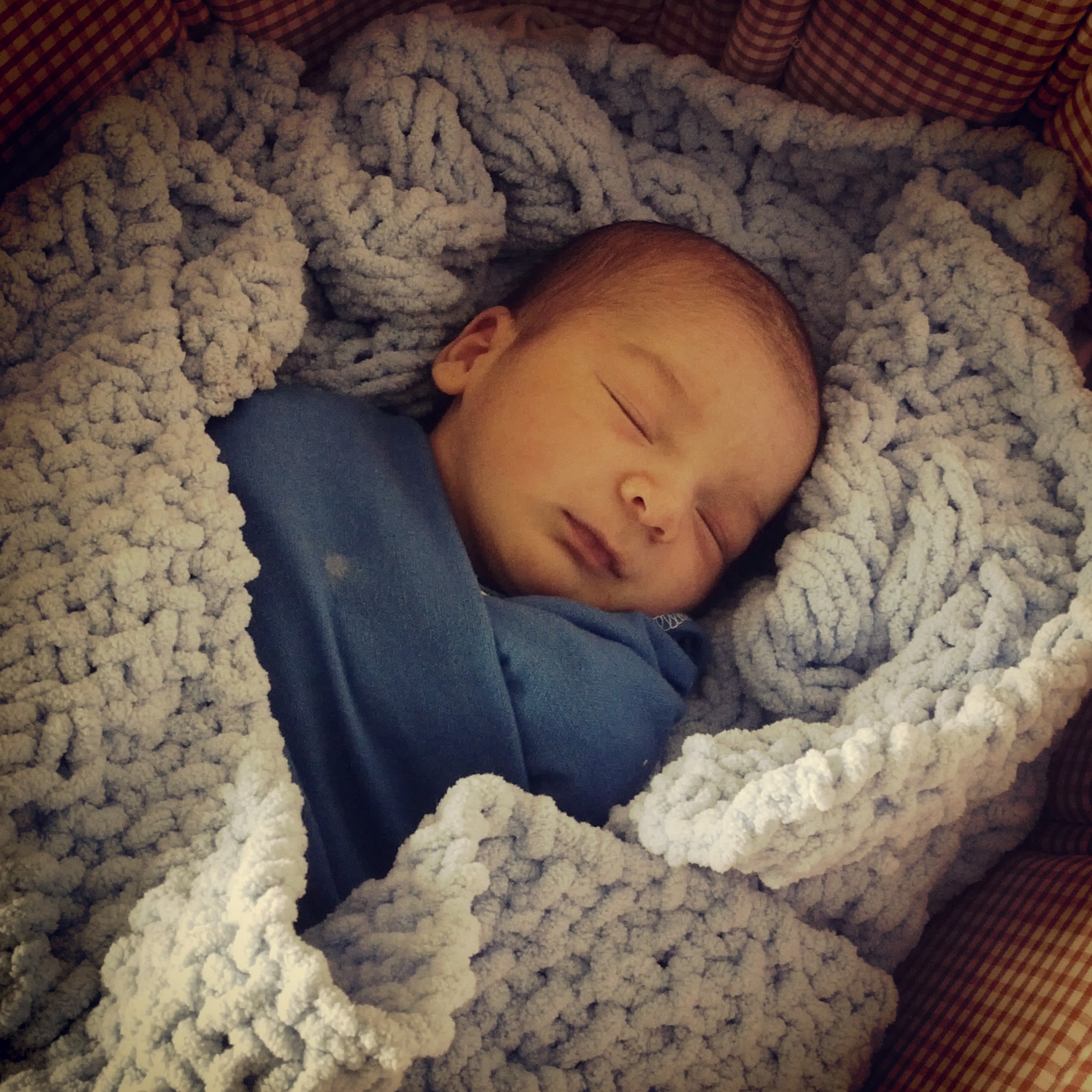
Isaiah Dev arrived at 5:08am.

Sara caught our son as he came out and handed him to Matt who rested the child on Ruth’s belly.  He was warm and slippery, covered with the broth he had been cooked in.  And that was it.  There he was.

Out other children were born in good, modern hospitals—the first in Canada, the second in Pakistan.  Both were very safe, highly professional places.  Sanitary, organized, business-like.  Both births were very much like watching a mechanic work on your car.  There was no magic, just mechanics.  We didn’t touch our children until they were appropriately cleaned and prepared.  And even then we had to give them back so they could endure some time under that blindingly warm light with that odd goo on their eyes.  The doctors who delivered our children disappeared immediately after it was over.  Sara stayed with us for hours.  The doctors told us what choices to make.  The midwives gave us information and asked us what choices we wanted to make.  In the hospitals Ruth was a patient with a condition to be cured.  With the midwives, she was a holy person creating another person.

Sara and Safire at Kensington Midwives completely blew our minds.  We never expected the level of care they gave us.  Because of them and all the other midwives and students and staff at Kensington Midwives, Ruth not only endured her pregnancy and labour, she enjoyed them.  Labour stopped being a painful thing to get through, it became a rare and vibrant experience to drink in.  It was not labour.  It was birth.

We learned things.

We learned that labour is not a trial to be endured—it is an experience to revel in.
We learned that your mindset will determine a large part of what your experience will be.
We learned that everything goes better with mindfulness and everything goes worse with worry.
We learned that Ruth is an awesome creator of humans and had no need to wake her husband or cry out for help when it was time to give birth. She is mighty enough to rely on her own strength.

That’s our story. We cannot thank the people at Kensington Midwives enough. Thank you for showing us how powerful a mother can be. Thank you for being a part of our person-making project.

My Son’s Name

There are a few ways to name a child, if you’re mindful about it. One is to look through names, the people who held those names, and the meanings of those names, and pick one that fits the child. That’s hard, though. Because my new son does not know what he loves yet. Except breasts. He totally loves breasts (but who doesn’t?).

Or we could have chosen names as templates for the child to grow into. We could have called him William, so that he’d grow up into a guardian of humanity. Or Aaron, so he’d grow into a teacher of wisdom. But who are we to chose what he will be and what he will love?

Besides, a name does not bestow its characteristics. The rose isn’t vibrantly red, deliciously pungent or dangerously thorned because of the word rose. The word conjures those images because of the plant, not the other way around. The awesome people of the past are not awesome because of their names. Their names are awesome because of them. So instead of naming him something that we hope he will grow to emulate, we chose names that carry meanings, either by their namesake or etymology, that we value and love. The name is our birthday gift to our son—a package of syllables that communicate how we feel about him.

Our son’s name is Isaiah Dev Cook.

Born Saturday, April 27, 2013 7lbs 14oz

Born April 27 at around 5am
7lbs 14oz

Isaiah was a human. A prophet. An intelligent flesh and blood creature who looked to the sky and perceived the creator’s will. He preached love and compassion and understanding. His words became the thesis for our i117 widow’s aid project (Isaiah 1:17). His views on fasting tear apart religious conventions and bring them down to a place that focuses on the needs of fellow humans (Isaiah 58). And it is in his writings that some of the most honoured pictures of the Christ, the archetype of perfect love, can be found (Isaiah 53).

My son’s name is Isaiah—the human who could hear the voice of God. The name is not a template for him to live up to, or a religious identifier, but an image of the perfect kind of humanity that Ruth and I love. It is a nascent echo of the most perfect expression of love finally uttered by the man Isaiah was pointing to: “Do as you would be done by” (Matthew 7:12).

Dev (affectionately Deva) is an ancient Sanskrit name that means ‘Divine’ or, in many instances, ‘God.’ Because my son is not just a creature. He is not only an animal. Attached to his frail physical form is a shard of God. A slice of divine, wrapped in a warm blanket of humanity. Dev is a name that reminds us of the meaning behind the ancient greeting of Namaste: “That which is divine in me salutes that which is divine in you.”

My son’s name is Dev—the sparkling divine being. Because when I hold him in my arms I cradle the living universe. Because he has consciousness and divine light and understanding inside of him that can only grow greater and stronger. Because he is a vibrant fraction of God. And if God is infinite, what is the weight of a fraction of God?

My son’s name is Isaiah Dev Cook. We use both names when we speak to him because he is both. He is the spiritual animal and the fleshy divine. He is the marriage between creation and creator. He is just like you. He is just like me.

And his names are reminders for us. When we get frustrated with his antics, because all children eventually frustrate their parents with their antics, we will have to pause when we call him. How can you speak angrily to Isaiah, the human who can hear the voice of the Universe? How can you yell at Dev, a pure slice of God? How can we do anything for our son, and our other children, but care for them and guide them and cherish them?

Thanks for all your happy well-wishes. I hope you get to meet Deva soon.

Honesty for Neutral People

I get my energy from people.  I have a yearning need to have people look at me and talk with me and listen to me talk.  That’s the way I am and I love it.

But it gets people like me in trouble sometimes because we get all giddy and warm when people approve of us.  And all mopey and weepy when people criticize.  It’s usually not because the people around us are mean or anything–we just have a hard time figuring out how to handle disappointment.

And that puts us in the dangerous position of being influenced by The Neutrals.

Neutrals are a class of relationship that has been empowered by social media.  You can tell you are in a Neutral relationship when the best interaction you have with a person is silence.  Silence is the Neutral’s stamp of approval on your life.  So long as they don’t talk to you, you’re doing something right.

But when you step out of line, when your words or lifestyle fall short of their standards, then they let you know.  Gently, of course.  Mindfully, even.  Hell, they might even be dead-on-right in whatever they are saying.  And they form everywhere–at work, at church, online, at school.  Everywhere.

If many of your relationships are Neutral, you will find it hard to be yourself in those venues because your self-expression risks waking the Neutrals.  And if you are not careful you will find your conduct dictated by people who ignore you at the best of times and oppose you when you step out of line.

The Internet makes many relationships potentially in The Neutral.  And I guess I could whine about that.  Maybe get some cathartic victim-talk going on.  But I’m thirty-one now and, like Nick, too old to lie to myself and call it honor.  The problem isn’t with Neutral relationships at all.  They are a partially a product of our tech and partially a product of well-meaning lovely people who just don’t have time to invest in every single one of their eight hundred Facebook friends.

No, the solution isn’t some victim rant.  It’s not the melodramatic pulling of hair and wonderment as to why the world can’t understand us.  The world never understood us–any of us.  It never will.  It’s too big, and so are we.  The best way to deal with a Neutral relationship is to not deal with it at all.

What do you get when you behave the way they want you to?  Silence from The Neutrals.

What do you get when you behave the way your heart leads you?  Opposition (maybe) from The Neutrals.  Stirring approval from your heart.  Constructive empowerment from your invested friends.

It’s not hard to see which path gives you more.

The Neutrals are useful–sometimes they have great points to make.  But they are only useful for information.  They should never be the reason you do (or don’t do) anything.

Talking About Anarchism – A Foundation

The foundation for what would eventually grow into anarchism was laid for me in grade two by a mean-tempered teacher named Miss Martin. Every Friday Miss Martin quizzed us on the times tables. It was a grueling test of a hundred questions. It was so long it made our hands ache. That was the point. Because if you ever finished the test without a single mistake, you’d be exempt from taking it for the rest of the year.  I got a perfect score on the third try.

I knew it as soon as I turned it upside-down on the desk next to me. I had been so close the week before and was completely fed up with the tedious and pointless work. I paid attention, avoided every careless slip, and nailed it. But when my peer marker handed it back, there was a tiny red X beside the fourth question.

3×3=9

But I was right. I knew I was right. I pointed the mistake out to my peer marker. She said my 9 looked like a 4. No problem, I thought. We’ll take the case to Miss Martin. The One Who Knows.  But Miss Martin took the Marker’s side.

I remained calm. I still knew I was right and I had lots of ways of proving it. I pointed out that 4 wasn’t even close to the right answer and no one in the whole class could have made that mistake. I showed her examples of how I wrote the number 4 compared to how I wrote 9 and clearly proved that my 4s looked nothing like 9s and my intention was obviously to put down a 9.

“This will teach you to use better handwriting,” she said, dismissing all my facts with a wave of her hand.

“But it’s a math quiz, not a writing quiz.”  It was no use. I wrote the quiz again the next week

I was disappointed. But more than that, I was shocked. Because I had proved I was right. How could she not have seen it? Did I argue my points wrong? I wrestled with it all day long and eventually this seed was planted deep inside my consciousness:

They don’t know everything.

I started to notice that no one at all seemed to really understand what was going on with life, despite all their apparent confidence. The Ones Who Had It Right looked no happier and were no kinder than The Ones Who Had It Wrong. The most common answers to the most interesting questions were supremely confident, “Because [your teacher / your parents / the elders / my version of God] said sos.”

Eventually it stopped making sense to submit my mind and lifestyle to The Ones Who Know. Because they don’t know—not any more than I do, at least. Because if they are no better than me, why would I follow their conscience, intellect or goodness instead of my own? Miss Martin’s seed grew up and a new idea hit me.

I have no need of governance.

That is anarchism. And it tastes delicious.

The greatest sins we commit on our children.

We destroy our children almost as soon as they are able to speak.

The children who use persistence to achieve their goals are called stubborn and strong-willed.  We beat it out of them.  We threaten them.  “I said no!  If you ask me one more time…”  We are determined to break the strong will.  To win against the child.

Never mind that the world needs more good people who are stubborn and strong-willed.

The children who question are called rebellious and irreverent.  We frown when they ask the most sacred questions (“why?  why not?”) and give them the most pathetic answer (“Because I said so.”)  We teach them to obey.  To submit.

Never mind that the world needs more good people who are rebellious and irreverent.


And then we tell them to work hard, just not against anything we have done.  We tell them to be themselves, unless the themselves are too different from what we’d like them to be.  We tell them to fight evil and worldliness, as we define them.  We make them into ourselves, only younger and better-looking.


I cannot think of a greater joy than this:

My children stand at the Edge and look over all the things that were made before they were born.  At the philosophies, the causes, the works and religions and arts.  And they judge them.  Some are better than others.  Some are worse.  They can tell because they were taught to ask and to be satisfied only with reasonable answers.  They can tell because they do not love a thing for being old or hate a thing for being new.  They can tell because they were taught to chose a path, not follow a well-worn one.  They can tell because they were trusted to think, not carried.

And as they look, they pick up the things that speak to their souls.  And after collecting as much or as little as they want, they look at it all, they look at the world, and they say to each other:

“We can do better than this lot.”

They leave me and my naive little world

And create a better one.